Neurodivergent communication differences – with Patti Kasper
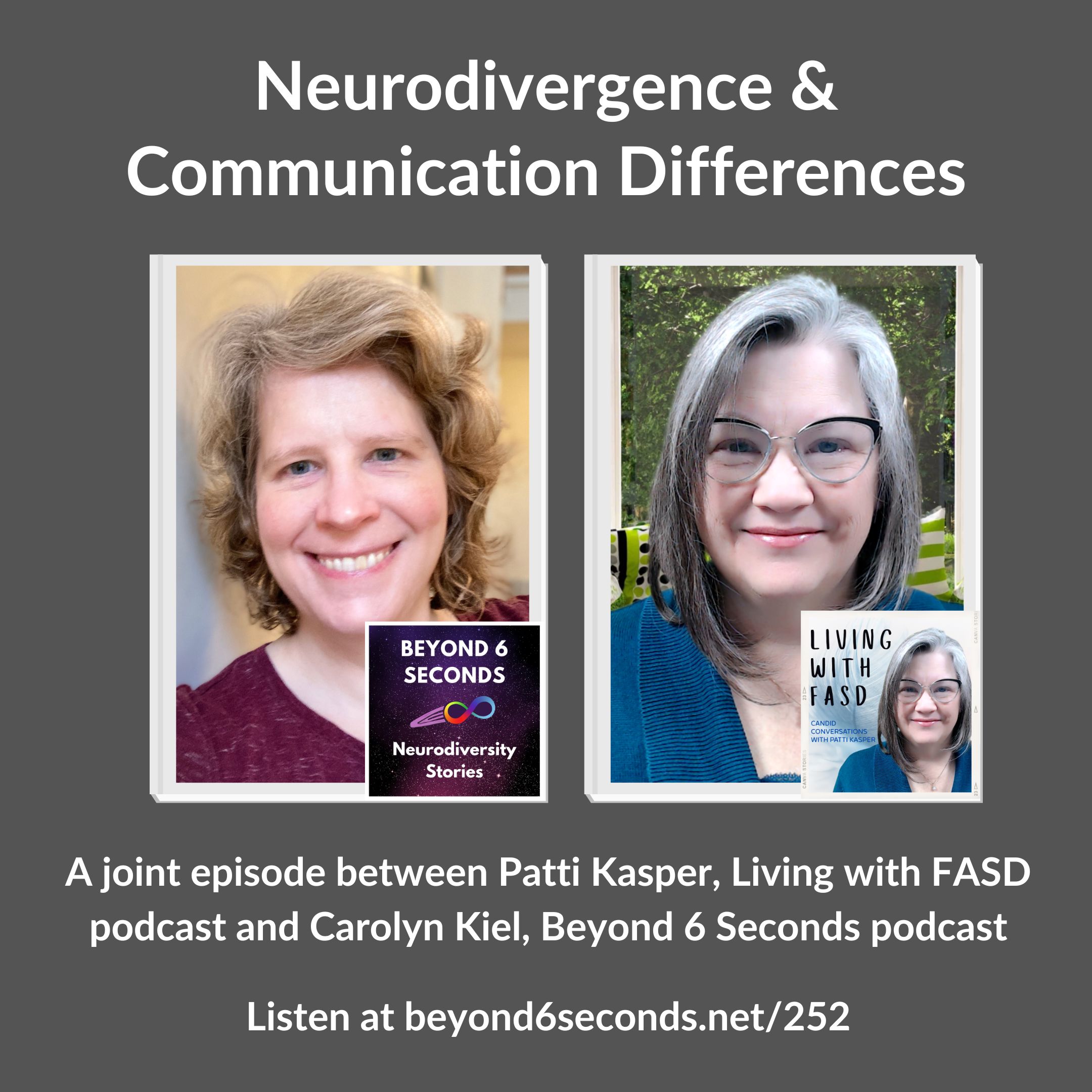


This episode is a special collaboration between Beyond 6 Seconds and the Living with FASD podcast hosted by Patti Kasper. Fetal alcohol spectrum disorders (FASD) are lifelong conditions caused by prenatal alcohol exposure that can impact physical, cognitive, and behavioral development.
FASD is a type of neurodivergence, but it's often left out of conversations about neurodivergence. This episode is part of a series that Patti is doing on her podcast to help bring FASD into those conversations.
We discuss what communication differences can feel like for people with certain types of neurodivergence, such as FASD, autism (including apraxia in non-speaking autism), ADHD, and schizophrenia. We also explore why communication challenges can happen, and how friends and loved ones can help provide understanding and support.
A quick caveat: This conversation is not medical or diagnostic advice, and it does not speak for every neurodivergent person. Instead, Patti and I are sharing our own experiences and some insights from the people we've interviewed on our podcasts.
You can find Living with FASD podcast on Apple, Audible, Patreon, Pocket Casts, Rumble and YouTube, and connect with Patti at dot.cards/yourfasdcoach.
Do the things we mention in this episode match your experience as a neurodivergent person? Do you have other experiences? Let me know what you think!
Watch the video of this interview on YouTube.
Follow the Beyond 6 Seconds podcast in your favorite podcast player.
Subscribe to the FREE Beyond 6 Seconds newsletter for early access to new episodes.
*Disclaimer: The views, guidance, opinions, and thoughts expressed in Beyond 6 Seconds episodes are solely mine and/or those of my guests, and do not necessarily represent those of my employer or other organizations. These episodes are for informational purposes only and do not substitute for professional medical advice. Consult a medical professional or healthcare provider if you are seeking medical advice, diagnoses, or treatment.*
